FRP is a fiber-reinforced plastic. In process equipment, the configuration must solve two functions: an internal surface suited to the medium and a structure capable of withstanding the loads on the asset. Resins, veils, reinforcements, thicknesses, geometry, joints, supports and fabrication are all part of the definition.
Two pieces of equipment both called “fiberglass” can behave differently because they do not share the same resin, construction, temperature, load or execution quality. That is why selection starts from the service and not from the generic name of the material.
What decides the use of FRP in a specific case
These variables are reviewed before proposing FRP, dual laminate or another system. Each one determines a design decision, not a fixed value. Operating ranges and service life are defined for the specific medium, its concentration and the actual operating regime.
Medium and composition
Defines the candidate materials and the compatibility verifications required.
Temperature profile
Changes the resin selection, the design margin and the behavior of joints and supports.
Pressure, vacuum and cycles
Defines the structural and stability verifications applicable to the asset.
Solids and abrasion
Changes the protection of the internal surface and the inspection strategy.
Geometry and external loads
Defines reinforcements, supports, anchors, transport and installation.
Joints and interfaces
Conditions fabrication, installation, inspection and repairability.
Access and maintenance
Defines inspection points and the way the asset can be serviced.
When to compare FRP with another alternative
The assessment must compare the complete service. There is no universal hierarchy among FRP, dual laminate, thermoplastics, lined steel, stainless steel or alloys.
01When the combination of medium and temperature demands a barrier that is better solved with a thermoplastic liner or another material.
02When the dominant load, impact, fire, the required inspection or the configuration favor a metallic solution.
03When the existing substrate can be restored with a technically suitable lining.
04When a standard thermoplastic pipe satisfies the service, the diameter, the pressure and the installation with less complexity.
05When the contract requires a certification, a code or a test that changes the solution and the qualifiable supplier.
Visual record
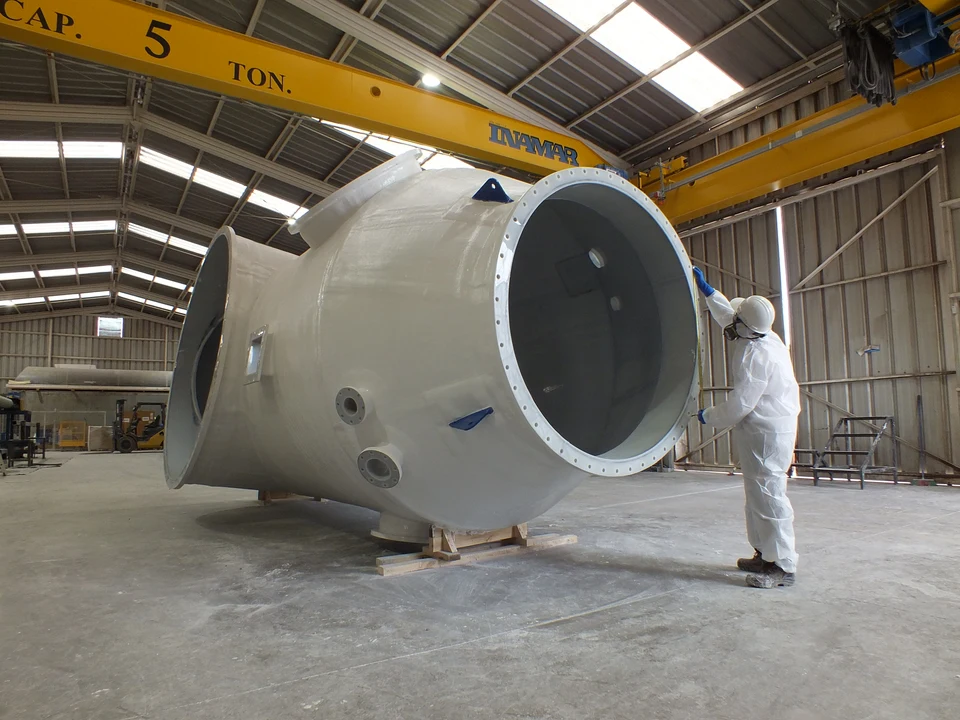
Large-format equipment fabricated in FRP at different stages of the production process.
Enlarge imageClose image
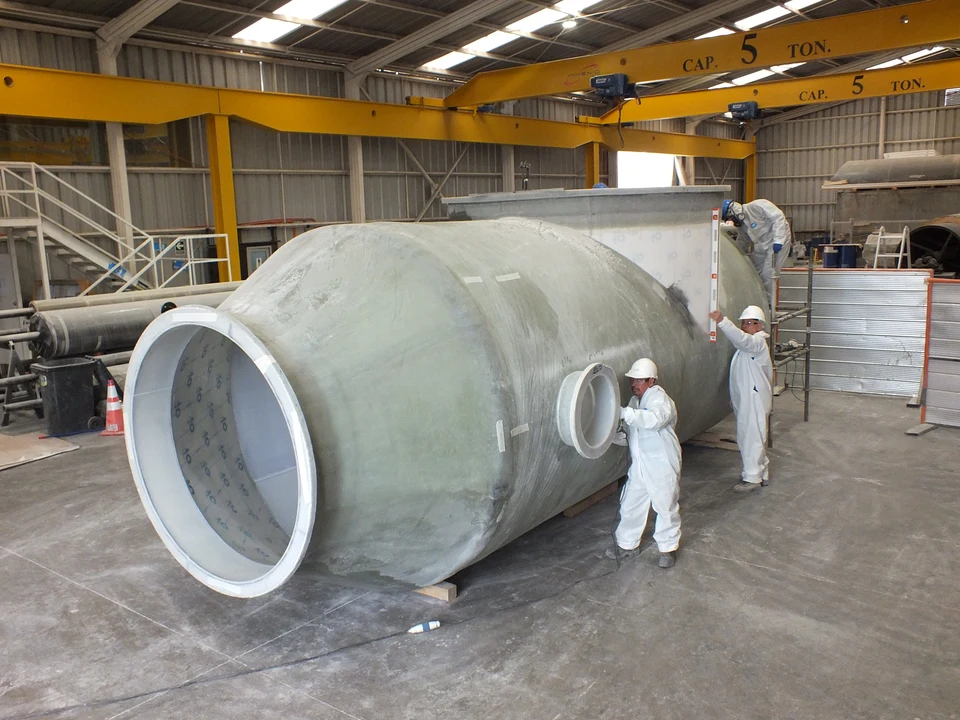
Check of a flanged nozzle face before dispatch.
Check of a flanged nozzle face before dispatch.Enlarge imageClose image
Dual laminate PVDF-FRP equipment, part of the tail gas treatment system, ENAMI Desulfurization Tower.
Dual laminate PVDF-FRP equipment, part of the tail gas treatment system, ENAMI Desulfurization Tower.Enlarge imageClose image
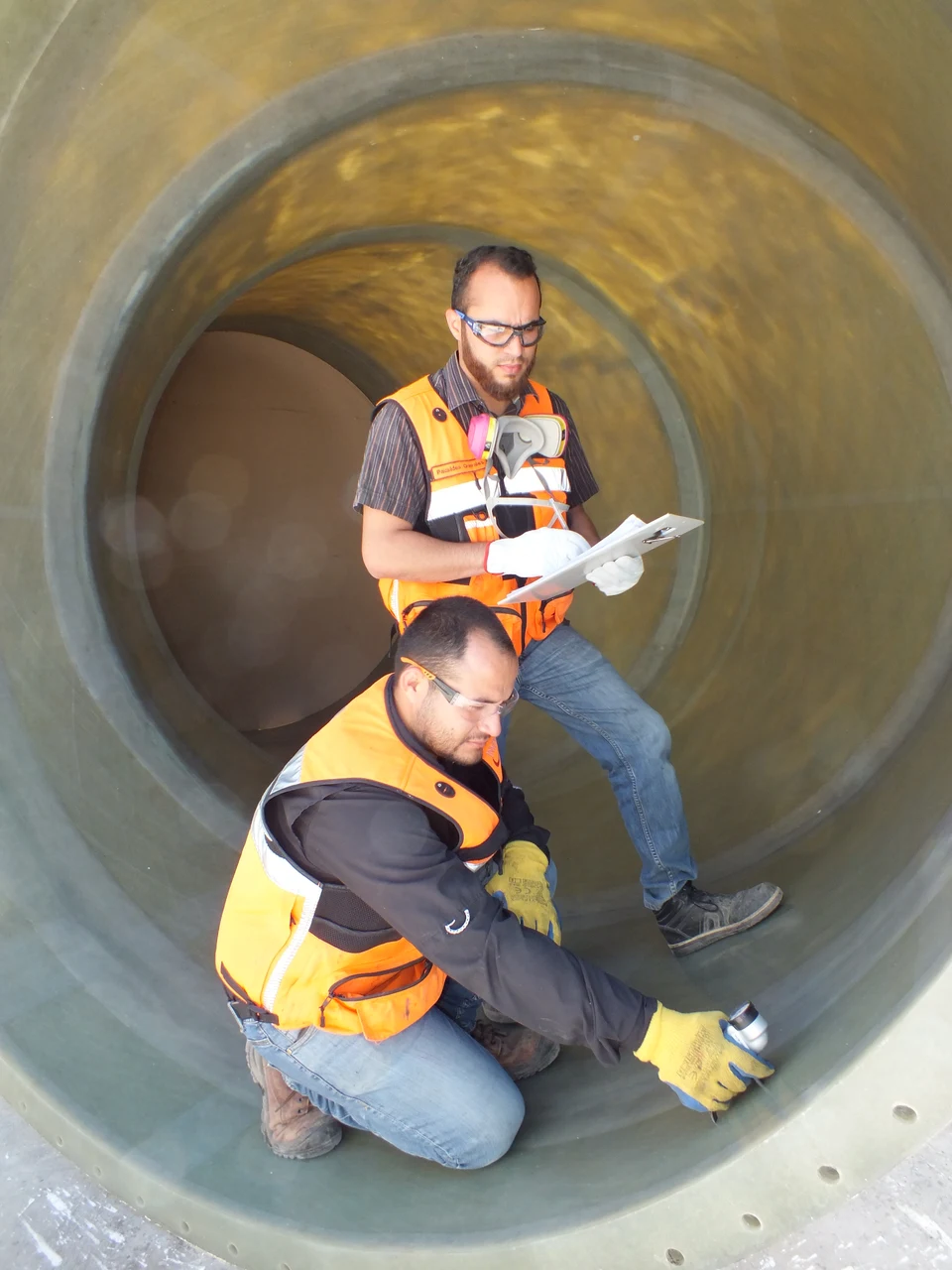
Interior inspection of FRP equipment.
Interior inspection of FRP equipment.Enlarge imageClose image
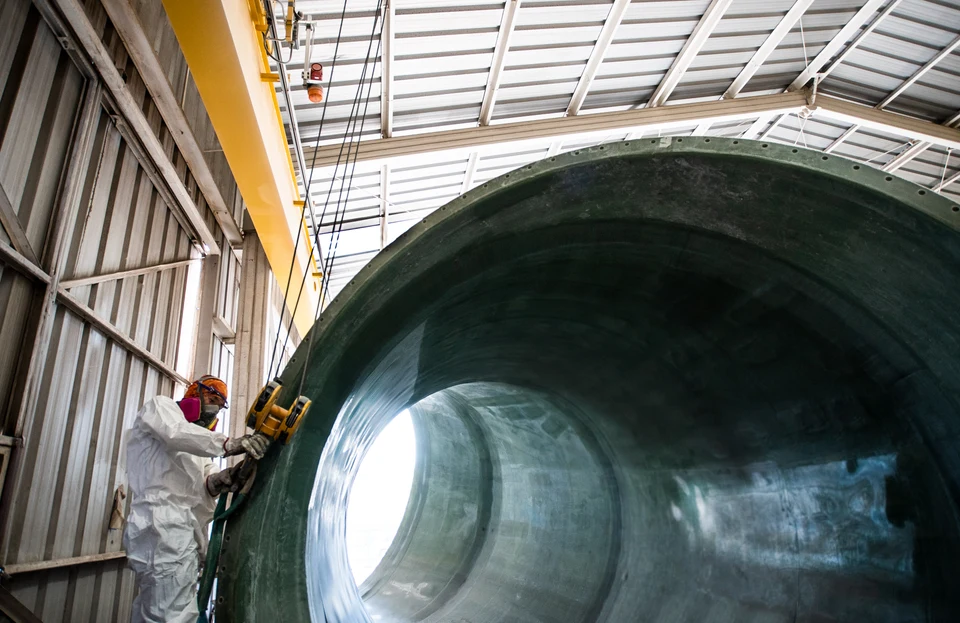
Finishing work on the interior surface of FRP equipment.
Finishing work on the interior surface of FRP equipment.
Equipment and system categories
Each one has its own page with selection variables and scope.
Send the medium, the composition, the temperature, the pressure or vacuum, the loads, the geometry and the installation constraints. The comparison must be made over the complete service.